بِسۡمِ اللهِ الرَّحۡمٰنِ الرَّحِيۡمِ
In December most masājid across the UK prepare their annual prayer timetables. While this effort is intended to serve the community, the wide variation in formats, languages, accuracy, and presentation has created unnecessary inconsistency. After reviewing many timetables, I believe a standardised format would significantly improve clarity, raise the overall standard of masjid communication, and promote greater unity across our communities.
My recommendations are offered sincerely and reflect my personal observations.
First, prayer timetables should use English and Arabic only, supported by accurate transliteration of Arabic terms. The prayer names originate in Arabic, and it is both linguistically and religiously appropriate to preserve them in their original form. Introducing Urdu, especially for basic words like “month”, “day”, or “date”, adds no real value and does not cater to any meaningful portion of the Muslim population. In fact, some masājid have inadvertently introduced spelling errors into their Urdu prayer names, which undermines the professionalism of the timetable.
Second, including Hijrī dates often causes more confusion than benefit. There is no single agreed-upon Hijrī calendar in global or local usage, and the lunar nature of the calendar means future dates cannot be predicted with certainty. Any year-long Hijrī calendar printed in advance is almost guaranteed to differ from actual crescent sighting. By removing Hijrī dates from prayer timetables, we avoid contributing to misconceptions and protect the integrity of the Islamic calendar itself.
Third, separating beginning times and jamā‘at times into two clear columns provides practical clarity. Those who pray at home rely primarily on the start times, while those who attend the masjid need the jamā‘at times. Collating them with beginning times on the left and jama'at times to the right serves the community more effectively.
Finally, using colour shading for rows and structured alignment enhances the readability of the timetable horizontally and helps namazees quickly locate the information they need for a given day. Colours are unnecessary for PRINTOUTS, shading of alternate rows should suffice.
Although I have used the 24h time format, I do not think that is necessary, 12h format is equally good.
Adopting a uniform, professional, and linguistically accurate timetable format would not only raise the standards of our maaasjid communication but also promote a stronger sense of unity and shared practice across the UK. When our timetables are clear, consistent, and rooted in sound principles, the whole community benefits.
Dr. A. Hussain (1st Dec. 2025)
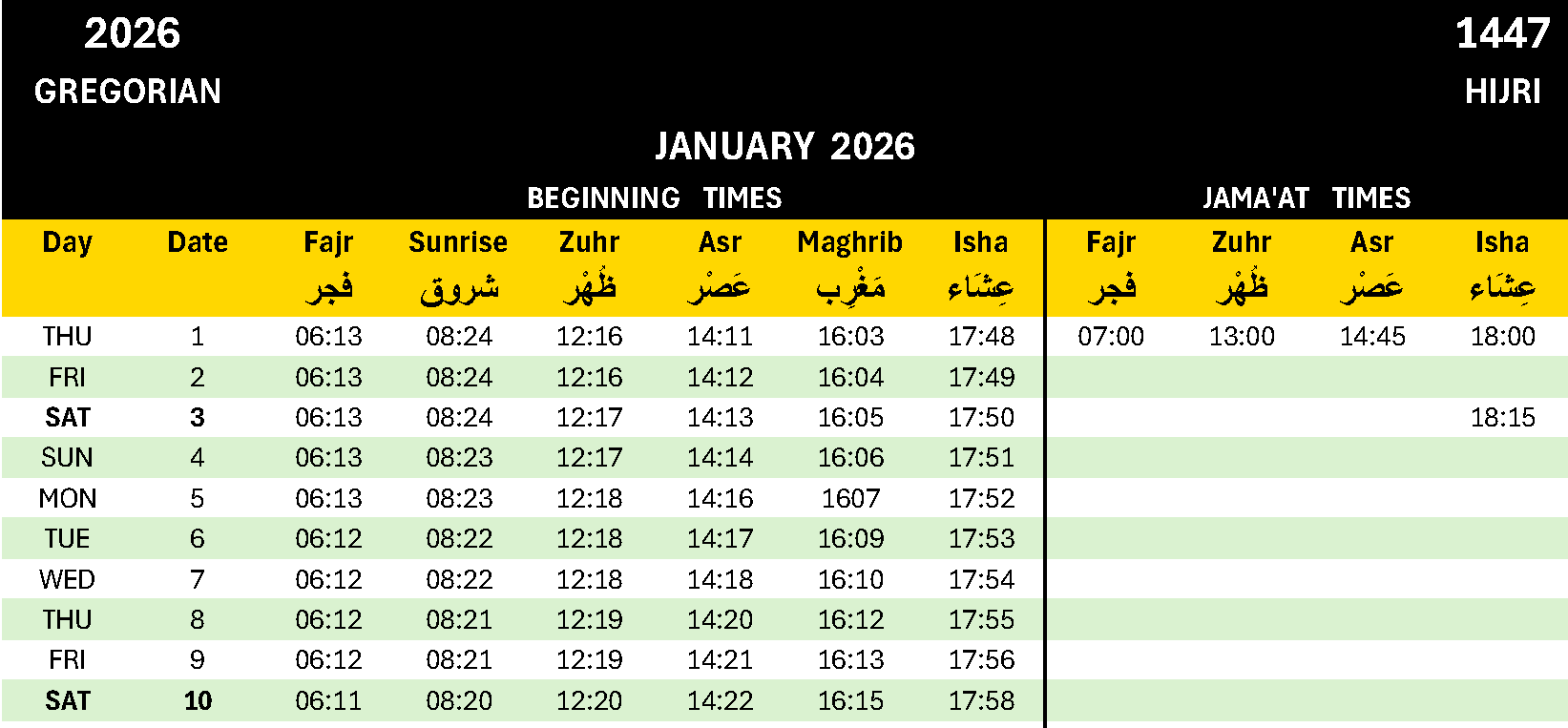
Suggested Prayer Timetable format (sample only)
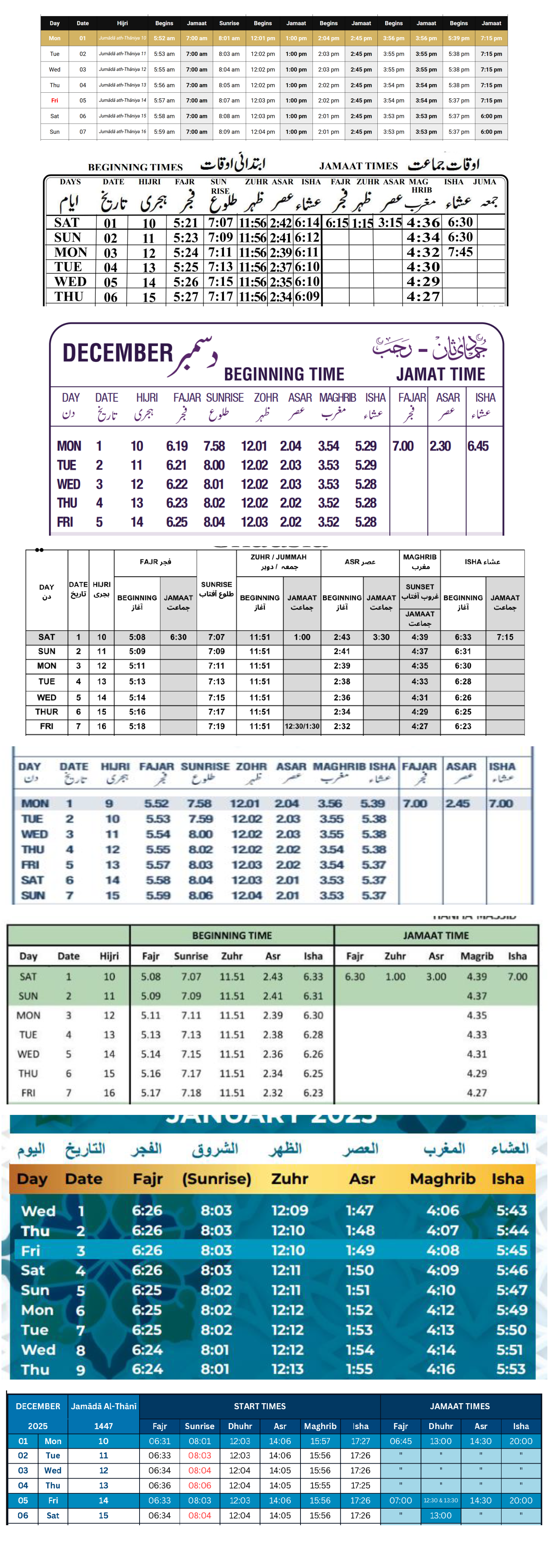
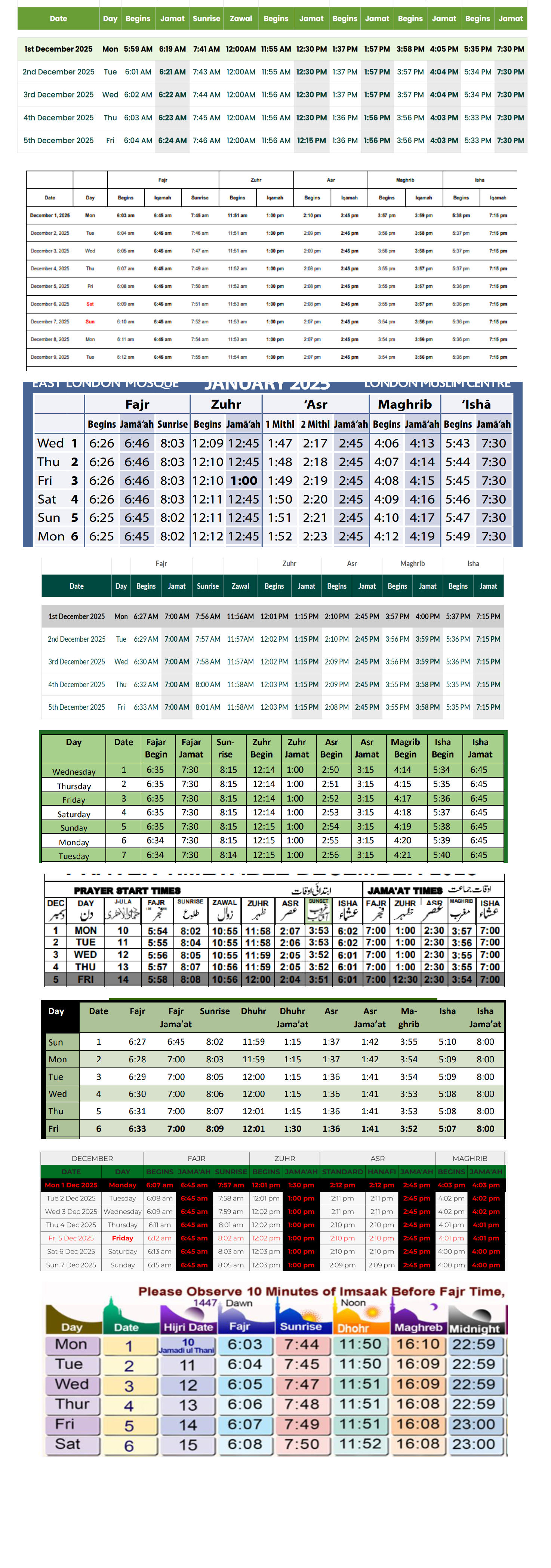
Selection of Prayer Timetable formats used by UK Masaajid